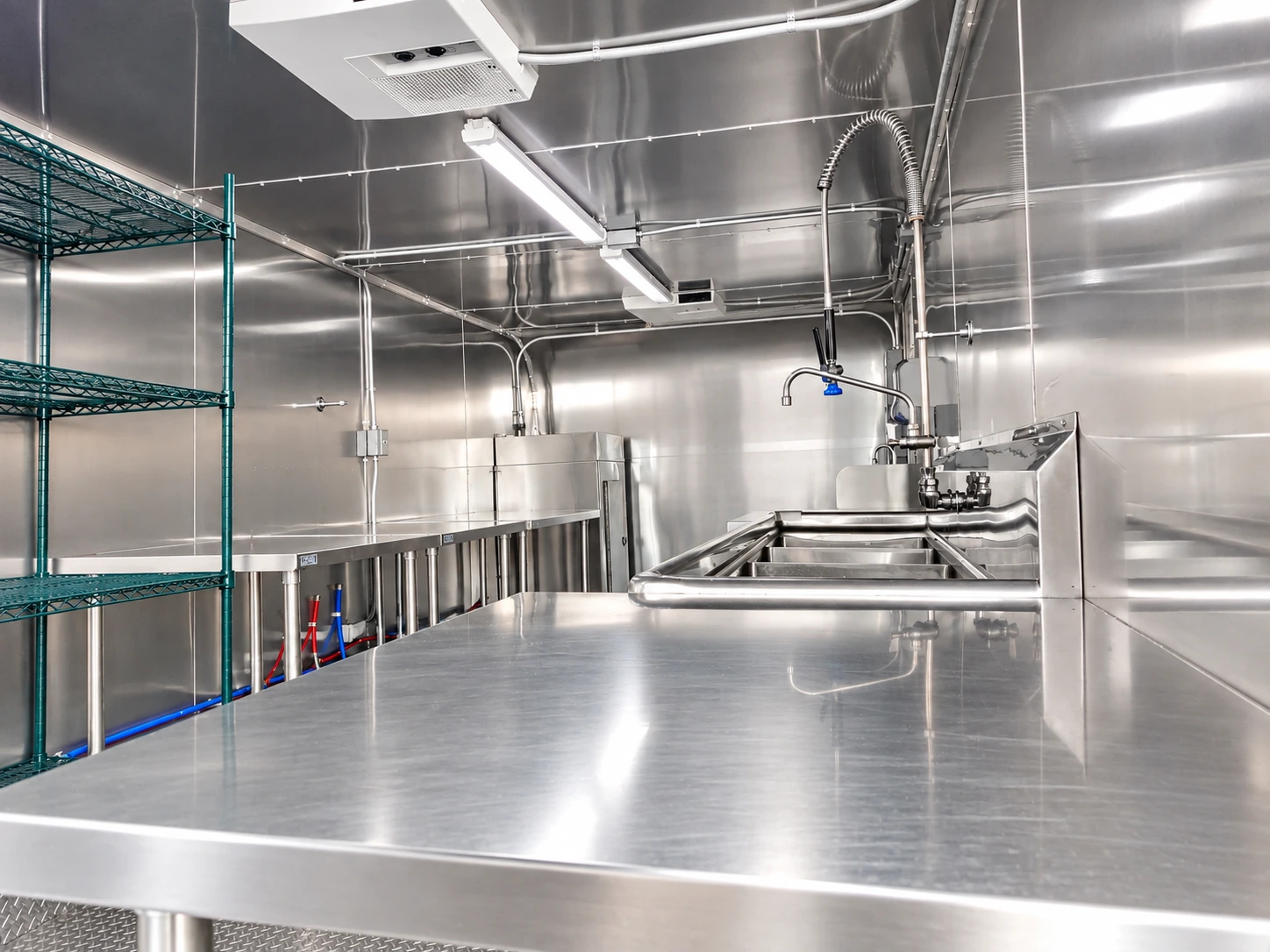
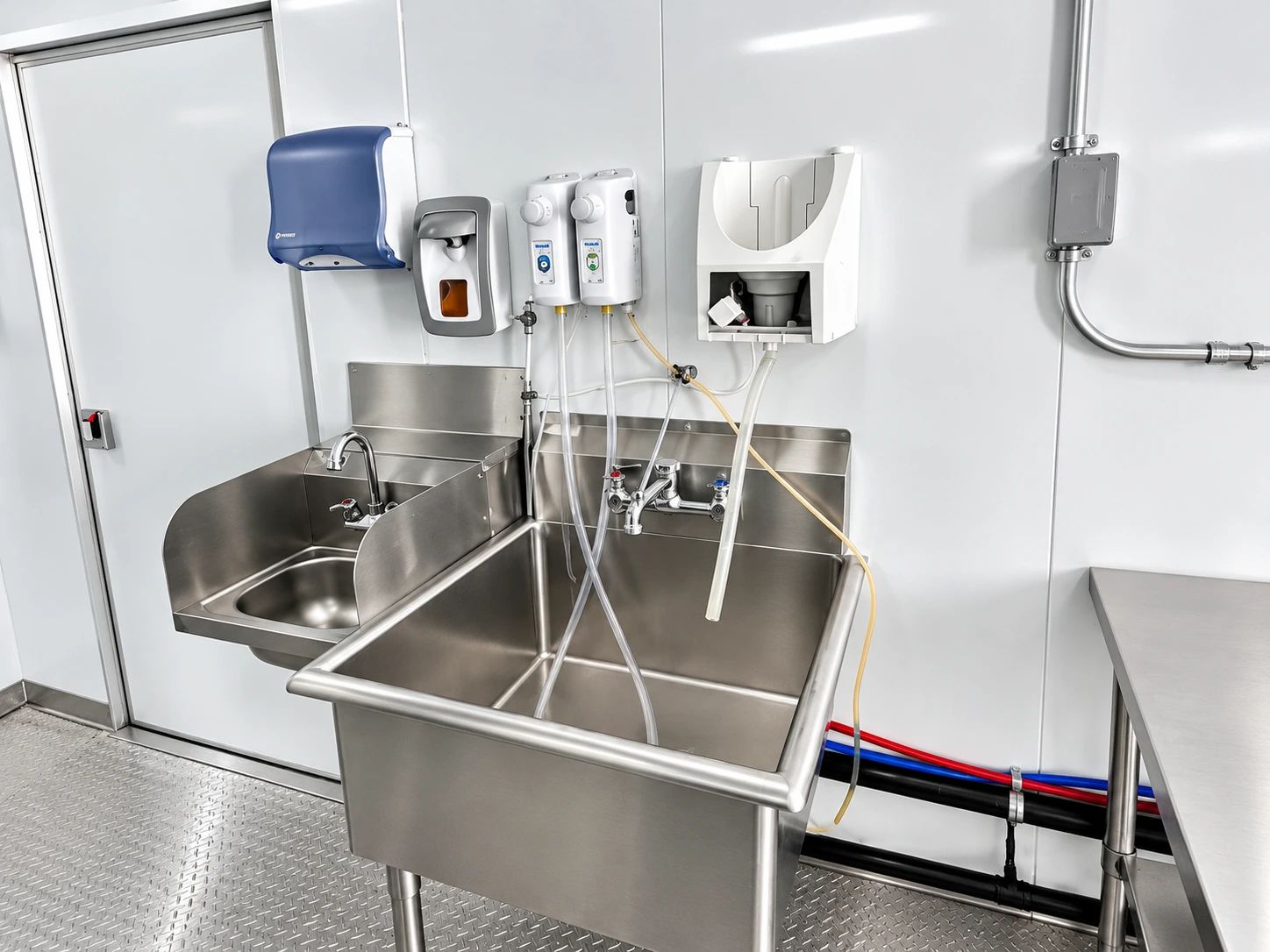
Equipment / 24ft

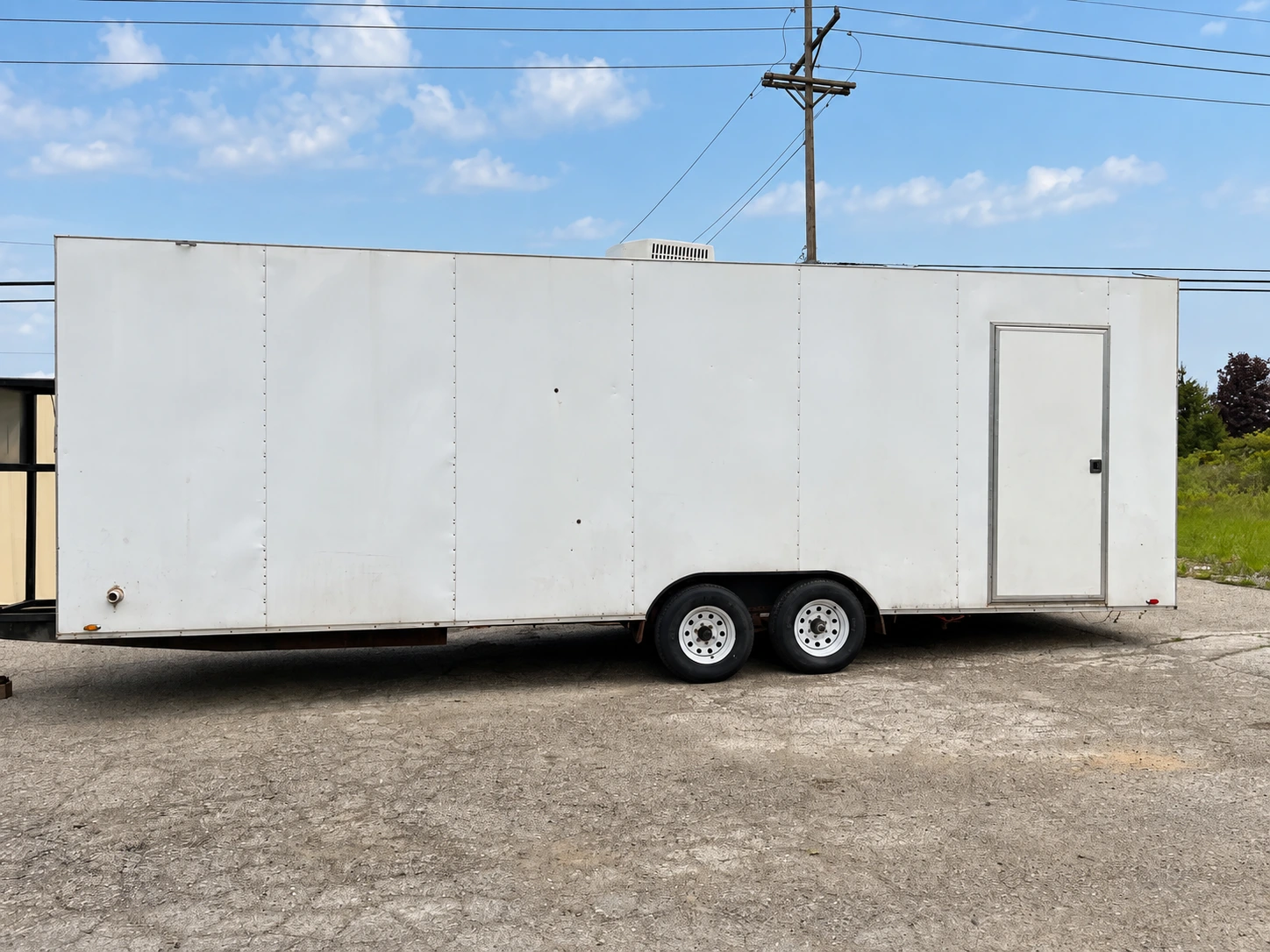
24ft Low-Temperature Dish Trailer rentals for commercial operations.

Plan 24ft low-temperature dish trailer rentals for Tennessee and eight neighboring states around the facility’s actual work. During renovations, construction, or an emergency closure, compare commercial kitchen trailer rentals with commercial dishwashing trailer rentals and emergency refrigeration when cold storage fails. For projects in Alamo and Camden, confirm the entrances, utilities, and operating schedule. Short-term rentals and longer-term leasing can serve commercial or institutional needs; delivery timing and site arrangements are agreed for the actual address. Call our 24/7 line to request availability and a project-specific quote.

See how the space works

24ft Low-Temperature Dish Trailer floor plan

A floor plan for this unit is available on request. Contact us for the current layout for this configuration.

Rental duration & configuration

The complete price reference.

Compare every supplied duration column. Confirm the final billing terms and all project charges in your written quote.

Reference rates come from the supplied equipment pricelist. A starting price is the lowest numeric entry in the longer-duration reference columns for the matching model; it is not a complete project quote. Delivery, setup, utility work, servicing, minimum terms, and other applicable charges need confirmation for the address and dates.

24ft Low-Temperature Dish Trailer

24ft Low-Temperature Dish Trailer — rental duration reference
Configuration / tier1-6 Days8 Days-14 days15days-1 monthMore than 3 Months
22-26ft Low Temp Dish Trailer (Tier 1)$5,995.00$5,995.00$5,995.00$4,995-$6,995
22-26ft Low Temp Dish Trailer (Tier 2)$4,995.00$4,995.00$4,995.00$4,995-$6,995
22-26ft Low Temp Dish Trailer (Tier 3)$4,995.00$4,995.00$4,995.00$4,995-$6,995
22-26ft Low Temp Dish Trailer (Tier 4)$4,995.00$4,995.00$4,995.00$4,995-$6,995

Make space for the work.

Start with the operation.

01 — The working plan

Start with the warewashing sequence.

Describe the trays, utensils, cookware, and service periods the dish room must support. Map the route from soiled return through scraping, washing and sanitizing to clean storage before comparing a push-through machine with a conveyor. Explain which commercial kitchen functions remain in the permanent facility and whether emergency refrigeration is also needed. If supplies move between this operation and Erwin, give each operating address and explain how clean and dirty items are kept separate in transit. Share the actual electrical service, water and wastewater arrangements, and staff route early; the quote should identify the selected dishwashing configuration and the connections the operator must provide.

Begin with the worksite rather than a point on a regional map. A commercial kitchen project in Dresden needs an actual placement area, a path for staff and supplies, and a practical separation between construction and food operations. Our guides cover verified Census places in the confirmed nine-state service region. They help you compare locations and equipment; they do not identify local depots or promise stock in each community. Give the address where the equipment will operate, including any separate service entrance, so the quote can address that site rather than a nearby town center.

For a Tennessee site, identify the responsible food-service authority from the operating address before setting the service start date. Ask which office reviews the proposed temporary operation and whether a separate institutional or event arrangement applies. Tell that office whether the trailer replaces an institutional kitchen, supports an event, or serves another operation. Bring the menu, proposed layout, selected equipment details and expected duration; ask which review and inspection steps apply. Coordinate the resulting requirements with the facility and the rental quote. An equipment arrival or an existing permanent kitchen does not establish permission for the proposed temporary food operation.

Match the washing model to the available service.

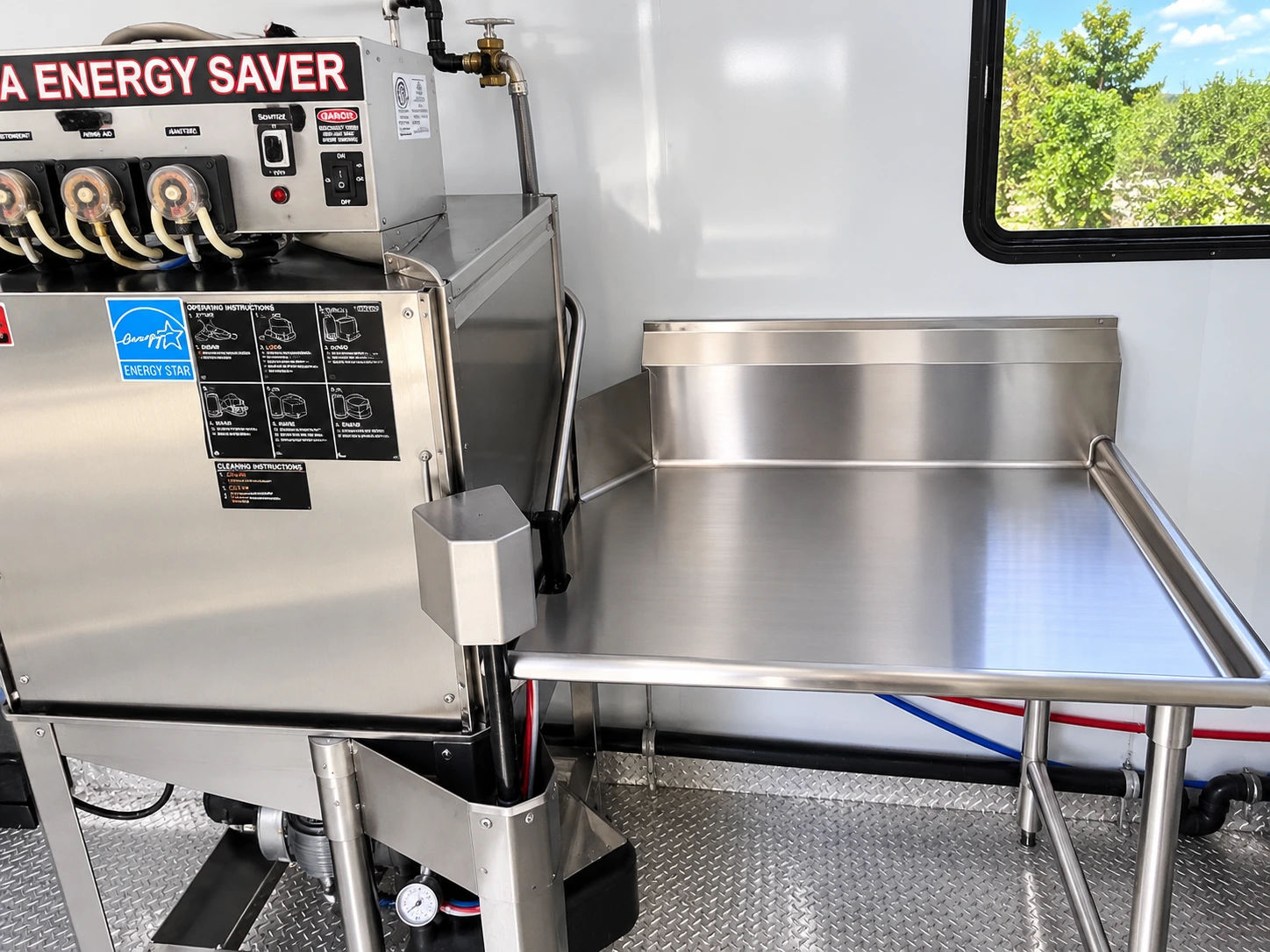
The dishwashing range includes a 22ft low-temperature push-through unit and separate 30ft and 38ft conveyor configurations. Compare the named model's machine, sinks, work areas, and electrical service against the operation; do not transfer one conveyor model's connection requirement to another. For a project near Mountain City, show where soiled items leave the commercial kitchen and where sanitized items return. Confirm the proposed washing and sanitizing process with the responsible authority. Trailer length does not establish throughput, and an available machine still needs compatible connections, usable work areas, and an agreed operating arrangement.

Kitchen and dishwashing setups generally need a five-hour planning allowance under the supplied setup guidance; other units have a one-hour baseline. Ramps can require four to six hours and stairs five to fifteen minutes, depending on the arrangement. These are planning allowances, not an arrival promise, permit approval, or a substitute for the site review. Discuss weekly or monthly rental needs and any longer project schedule. GPS tracking available on request. Actual delivery timing is agreed for the location and selected equipment.

Give dirty and clean work their own path.

A dish room interruption needs more than a dishwasher in a parking space. Identify where soiled items arrive, where they are scraped, how they move through washing and sanitizing, and where clean items are stored. If your operation spans this site and Bells, describe each location's warewashing and transport arrangement rather than treating both as one identical utility plan. Compare low-temperature push-through models with conveyor configurations. The 30ft high-temperature conveyor model calls for 220V, three-phase, 200A service for that model; it should not be treated as interchangeable with the separately specified 38ft models.

Plan for the cold-storage interruption.

When permanent refrigeration breaks down, tell us what product needs storage, the required operating temperature, the load, and how staff will access it. Refrigerated trailers and containers have different positioning and unloading arrangements; their exact power, internal dimensions, and operating specifications need to match the selected unit. If another part of the operation is based in Maury City, identify where the product will actually be held and moved. A broad coverage map is not evidence of a local stocked unit. Ask about availability and the configuration before relying on a temporary cold-storage arrangement.
Why plan with Urchin?

Keep the essentials in view.

Planning for 24ft Low-Temperature Dish Trailer starts with 24ft Low-Temperature Dish Trailer. Confirm the configuration, operating schedule, utilities, and receiving arrangements together so the quote addresses the work the facility must maintain.

01

Deployment planning

Identify the washing position, soiled-item return and clean-item collection path. Give the delivery team the approved entrance and a receiving contact for the actual address.

03

Project coordination

Coordinate washing and sanitizing with the commercial kitchen’s serving periods. Identify who supplies each connection and how clean items return without crossing the soiled-item route.

04

Flexible rental planning

Plan the rental around the dish room’s shutdown and return to service. Include any transition period and ask how schedule changes or extensions affect the quoted terms.

05

Commercial equipment choices

Compare 24ft Low-Temperature Dish Trailer against the items to be washed and the model’s listed equipment. Confirm the exact electrical service; conveyor configurations have different requirements.

06

Access and utility checks

Check the selected machine’s electrical supply, potable water and wastewater arrangements. Confirm the washing and sanitizing process and any review required for the actual operation.

24/7 contact lineCommercial equipment referencesNine confirmed service states

The location matters.

Think through the site.

02 — The local context

01 / Past emergencies and continuity planning

FEMA lists Crockett (County) under DR-4898 for severe winter storm, with an incident beginning January 22, 2026 and a declaration dated February 6, 2026. This is county-level historical planning context; it does not establish damage at every property or a current emergency at your site. A facility reviewing continuity arrangements near Huntingdon can use that history to ask what happens if power, water, or access becomes unavailable. Identify which cooking processes can continue, what product needs cold storage, and who will authorize the temporary operating arrangement before equipment is positioned.

02 / Construction and access planning

During a construction project, the usable entrance and laydown space can change between phases. For a job near Waverly, ask the general contractor to identify the approach, the trailer position, any work-zone restrictions, and the person who will receive the equipment. Keep the staff route and supply deliveries separate from active work where the site plan requires it. We do not assume a public road project is active at your address or that a facility is our customer. Share the current approved access instructions and recent site photos so the rental discussion can address the actual phase of work.

03 / Renovation and temporary operations

For a renovation near Smithville, start with the shutdown sequence: which workstations close first, where ingredients arrive, where food is prepared, and how clean utensils return to service. A school cafeteria, healthcare kitchen, or hotel may need to maintain an operating schedule while different parts of the permanent facility are worked on. Tell us whether the rental must replace the whole cooking operation or only a specific function. A planned temporary arrangement should be reviewed against the actual menu and site requirements; the presence of construction nearby does not itself establish a need for a kitchen rental.

04 / Emergency access and the receiving site

A public disaster staging site and a commercial delivery site serve different purposes. Before a rental for Livingston is dispatched, obtain the operating address, the approved arrival instructions, any site restrictions, and a named receiving contact. Follow current directions from the responsible road and emergency authorities when conditions change. We do not designate public staging areas as our depots or publish an assumed emergency route. For the worksite itself, identify the entrance, turning and placement space, overhead constraints, pedestrian separation, and the collection path. If access cannot be confirmed, resolve it with the site coordinator before settling an equipment arrival.

05 / Rental costs and the exact quote

Use the configuration and the operating dates to compare rental costs for a project near Dunlap. 24ft Low-Temperature Dish Trailer has a reference starting price of $4,995 for comparison with its duration and tier table; confirm the billing period and project terms in the quote. A reference figure is not a delivered project total or a daily, weekly, or monthly billing promise. Delivery, setup, servicing, and minimum terms are confirmed in the quote. Give the full address and utility information, and ask which charges, connections, and services are included before comparing proposals.

Planning reference: Tennessee Department of Health — Environmental Health. Confirm the operating classification and approval requirements with the responsible health authority for the actual address.

Before the next step

A few useful answers.

Have a question about the configuration or the site? Call 888 385-5513.

What information should I have ready?+

Start with the operating address, preferred dates, menu or processes, expected service schedule, and available utility details. Include recent access photos and any site restrictions. For a multi-site project, give each address separately; a nearby city guide cannot replace a receiving-site plan.

Does a nearby city guide mean equipment is stored there?+

No. The guides describe planning within our confirmed regional market. They do not establish a depot, local stock, a reserved configuration, or a delivery time. Call to check availability for the location and dates before relying on an equipment arrangement.

Can the trailer operate as soon as it arrives?+

Positioning is one part of setup. The selected equipment needs the correct connections, an appropriate access arrangement, and any review required for the operation. Ask the local health and other responsible authorities which requirements apply, and coordinate them with the facility before service begins.

What does the reference price include?+

Use the full duration and tier table for the selected model, then request the location-specific quote. The printed price bands do not establish every billing term. Delivery, setup, servicing, minimum terms, utility work, and any other applicable charges or exclusions should be confirmed in writing.

Keep the next meal on the plan.

Tell us what needs to keep working.

Bring the site, dates, menu, and utility information. We’ll talk through the available equipment and the next step for your project.

Let's plan the next step

Tell us about your project.

Commercial kitchen, dishwashing, and refrigeration rentals across our nine-state region.