Start with the work that has to continue.
Write down the menu, preparation steps, serving periods, staffing, and washing method before choosing trailer length. A commercial kitchen rental should support the actual workflow rather than a guessed meal count. If the project also needs commercial dishwashing trailer rentals or emergency refrigeration, describe the washing volume and product-storage requirements separately so their connections and placement can be considered together. A plan that works for a facility in Arcola may need a different arrangement at your site because its equipment schedule, service access, or utility supply differs. Share those differences early; the quote should identify the selected configuration and what the operator must provide.
For the receiving address in Inverness, start by identifying who reviews the temporary food operation and who controls the placement area. The Census place boundary identifies the community in this guide; it does not settle which office reviews your particular operation. The historical 2020 Census county association is Sunflower County. Give the operating address and equipment layout to the responsible authority, and ask which approvals apply before service starts. A project in Moorhead needs its own answer: a nearby facility's review cannot establish permission, utility readiness, or access for yours.
Mississippi State University Extension’s mobile-food guidance discusses food preparation and dishwashing on the unit or in an approved servicing area, along with potable water and wastewater arrangements. Use those topics to describe the proposed workflow, then confirm the controlling requirements with the Mississippi State Department of Health. Explain which functions remain in the permanent facility and which move into rental equipment. A separate dishwashing trailer and a complete kitchen replace different functions; the servicing area, staff movement, and utility connections need to work for the approved operation.
Choose the cooking line, then check the connections.
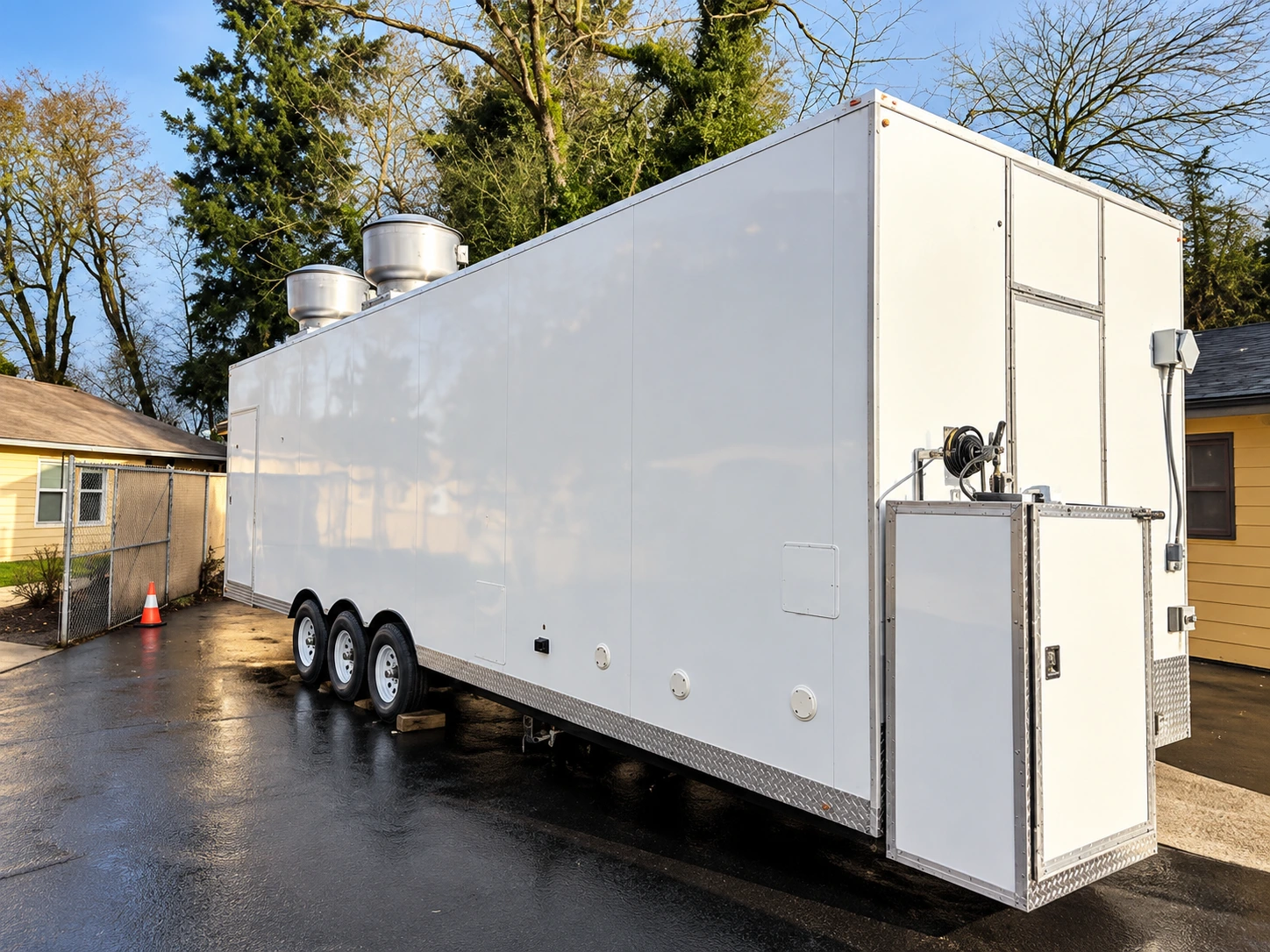
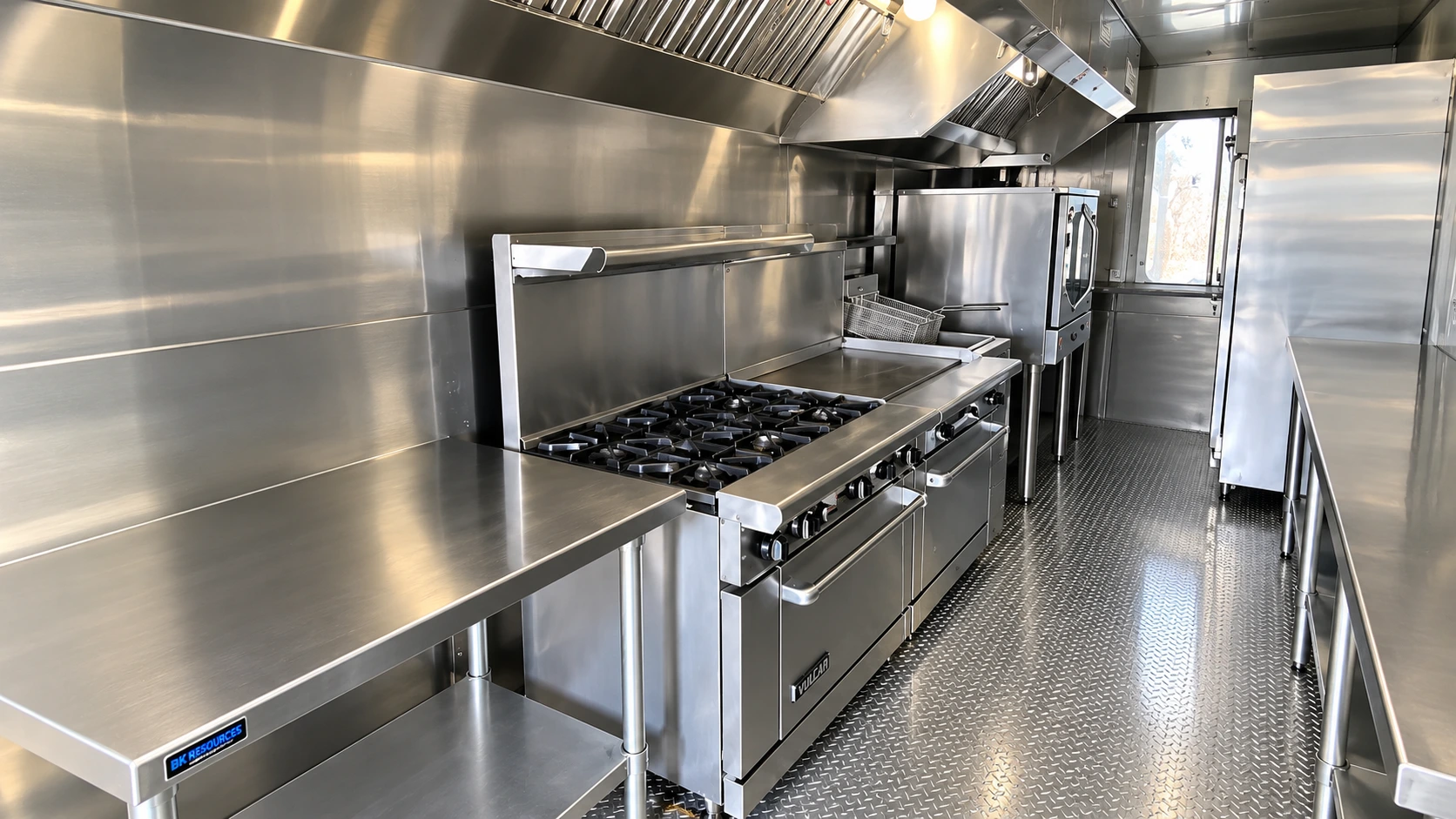
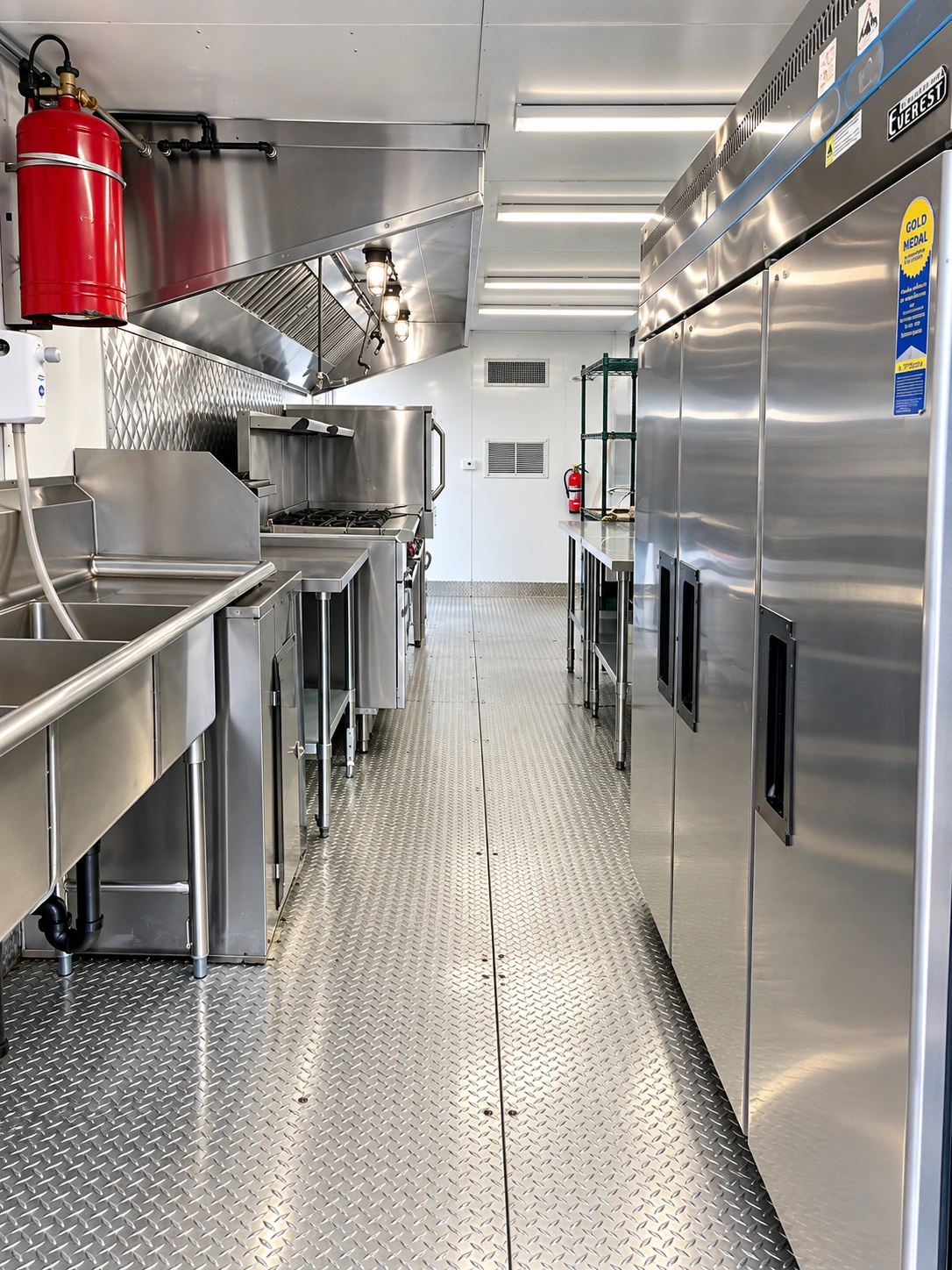
The kitchen range includes 24ft, 28ft, 38ft, and 40ft configurations, with separate Combo and Bulk Combo options. The individual configurations include cooking, preparation, handwashing, and three-compartment washing equipment; the selected model's page keeps its details together. For a project near Mississippi Valley State University, compare which appliances the menu actually requires and where staff will move between stations. Length alone does not establish usable production capacity. Electrical supply, fuel arrangements where applicable, water, wastewater, ventilation, and any local review must be checked for the equipment and the specific operation.
Kitchen and dishwashing setups generally need a five-hour planning allowance under the supplied setup guidance; other units have a one-hour baseline. Ramps can require four to six hours and stairs five to fifteen minutes, depending on the arrangement. These are planning allowances, not an arrival promise, permit approval, or a substitute for the site review. Discuss weekly or monthly rental needs and any longer project schedule. GPS tracking available on request. Actual delivery timing is agreed for the location and selected equipment.
Give dirty and clean work their own path.
A dish room interruption needs more than a dishwasher in a parking space. Identify where soiled items arrive, where they are scraped, how they move through washing and sanitizing, and where clean items are stored. If your operation spans this site and Silver City, describe each location's warewashing and transport arrangement rather than treating both as one identical utility plan. Compare low-temperature push-through models with conveyor configurations. The 30ft high-temperature conveyor model calls for 220V, three-phase, 200A service for that model; it should not be treated as interchangeable with the separately specified 38ft models.
Plan for the cold-storage interruption.
When permanent refrigeration breaks down, tell us what product needs storage, the required operating temperature, the load, and how staff will access it. Refrigerated trailers and containers have different positioning and unloading arrangements; their exact power, internal dimensions, and operating specifications need to match the selected unit. If another part of the operation is based in Hollandale, identify where the product will actually be held and moved. A broad coverage map is not evidence of a local stocked unit. Ask about availability and the configuration before relying on a temporary cold-storage arrangement.